North NJ's Trusted Roofing & Chimney Specialists · Free Written Estimates

Roofing · North New Jersey

Flat Roof Repair in North New Jersey

Ponding water, split seams, blisters, and clogged drains are the usual suspects on a flat roof. Asset repairs EPDM rubber, TPO, modified bitumen, and built-up roofs on homes and commercial buildings across North New Jersey.

  • Licensed & Insured
  • Free Estimates
  • Mon – Sat: 9:00 AM – 8:00 PM
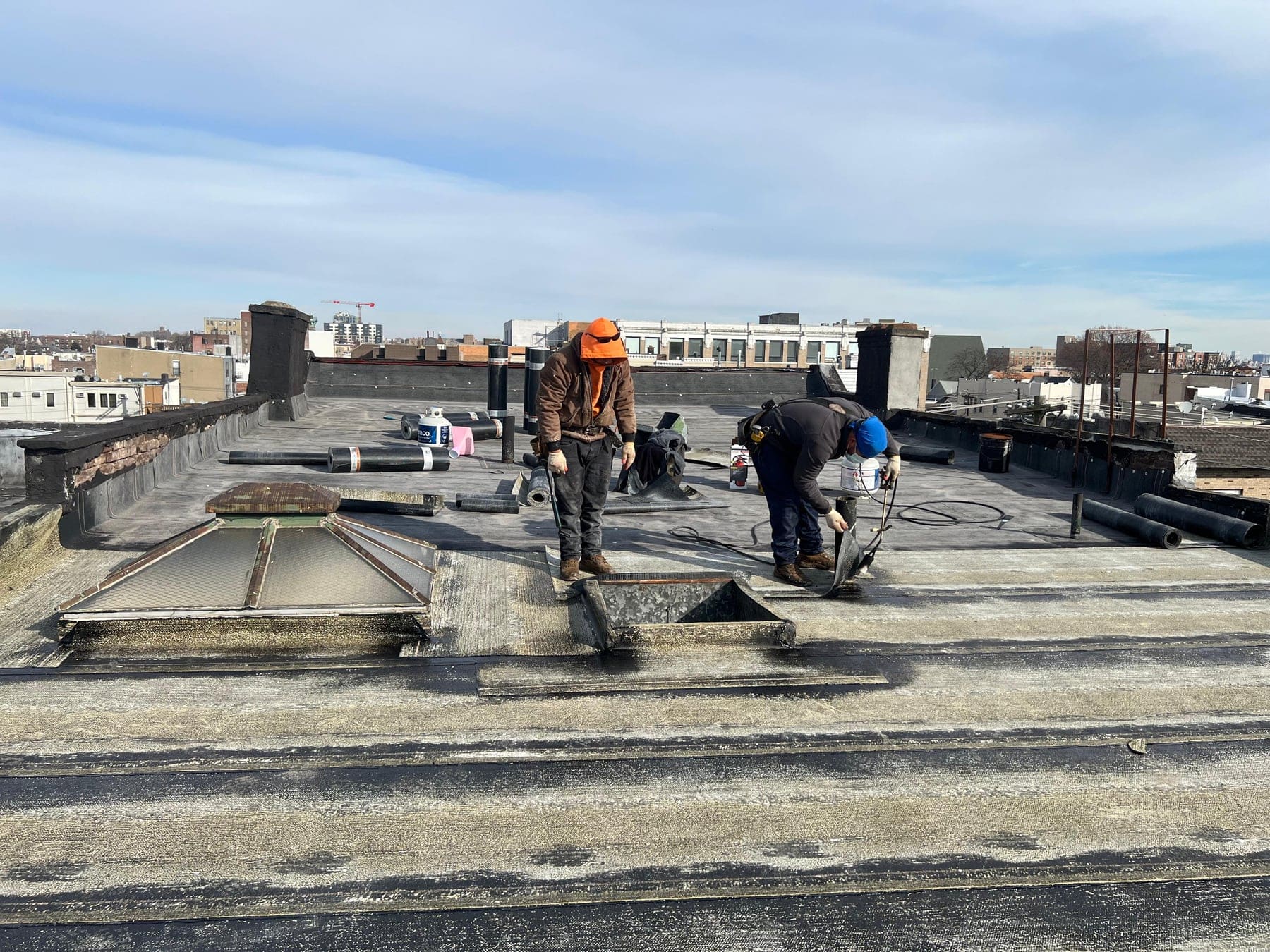
Asset crew repairing a commercial flat roof

Flat and low-slope roofs are everywhere in North Jersey: on row houses, rear additions, garages, mixed-use buildings, and commercial properties. They work differently from shingle roofs. Instead of shedding water quickly, they rely on a continuous membrane, sealed seams, and drains that actually drain. When any one of those fails, water sits, finds the weak spot, and ends up inside, often well away from where it entered.

Asset Roofing & Chimney specializes in flat roofing alongside shingle work. We repair rubber (EPDM), TPO, modified bitumen, and older built-up tar-and-gravel roofs for residential and commercial owners throughout Bergen County and North New Jersey. Repairs range from re-seaming and patching to rebuilding flashing at parapet walls, curbs, and rooftop units, and correcting drainage so water stops ponding in the first place.

A flat roof repair made with the wrong material or without the right primer will not bond and will fail within a season. We identify your membrane first and match the repair method to it. If you have noticed staining on a top-floor ceiling, water still pooling days after rain, or bubbles in the roof surface, call (201) 727-3113 or request a free estimate.

What flat roof repair from Asset includes

  • Membrane identification and full condition assessment
  • Seam re-welding or re-adhering, matched to the membrane type
  • Patching of punctures, splits, and blisters
  • Flashing repairs at parapets, curbs, skylights, and HVAC penetrations
  • Drain and scupper clearing, re-sealing, and replacement
  • Tapered insulation or crickets to correct ponding where practical
  • Roof hatch and skylight curb sealing
  • Photos and a written summary of what was done
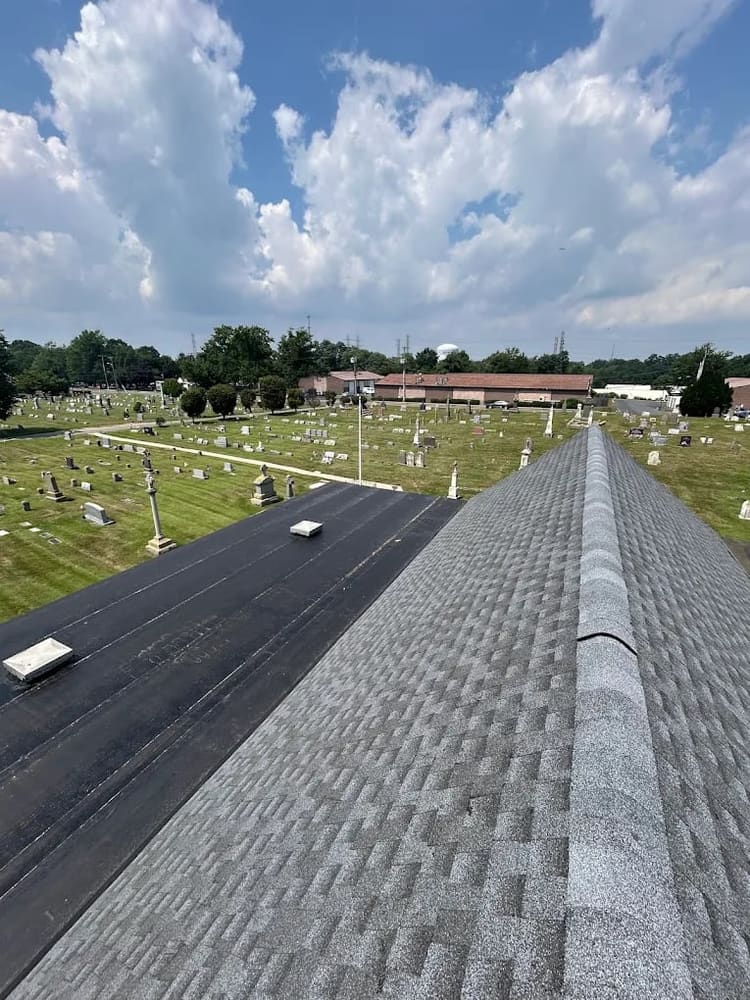
Low-slope roof with new membrane and shingle ridge

Our Work

Flat Roof Repair: our crews at work

Real photos from Asset Roofing & Chimney jobs across North New Jersey.

Low-slope roof with new membrane and shingle ridge
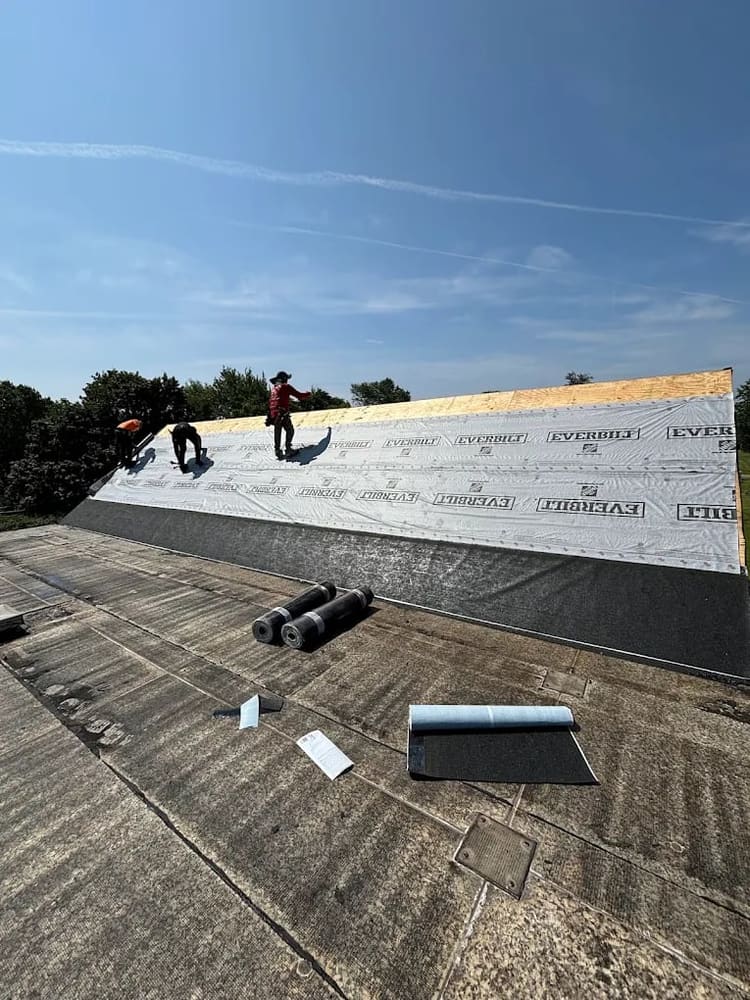
Flat roof membrane being installed on a low-slope roof
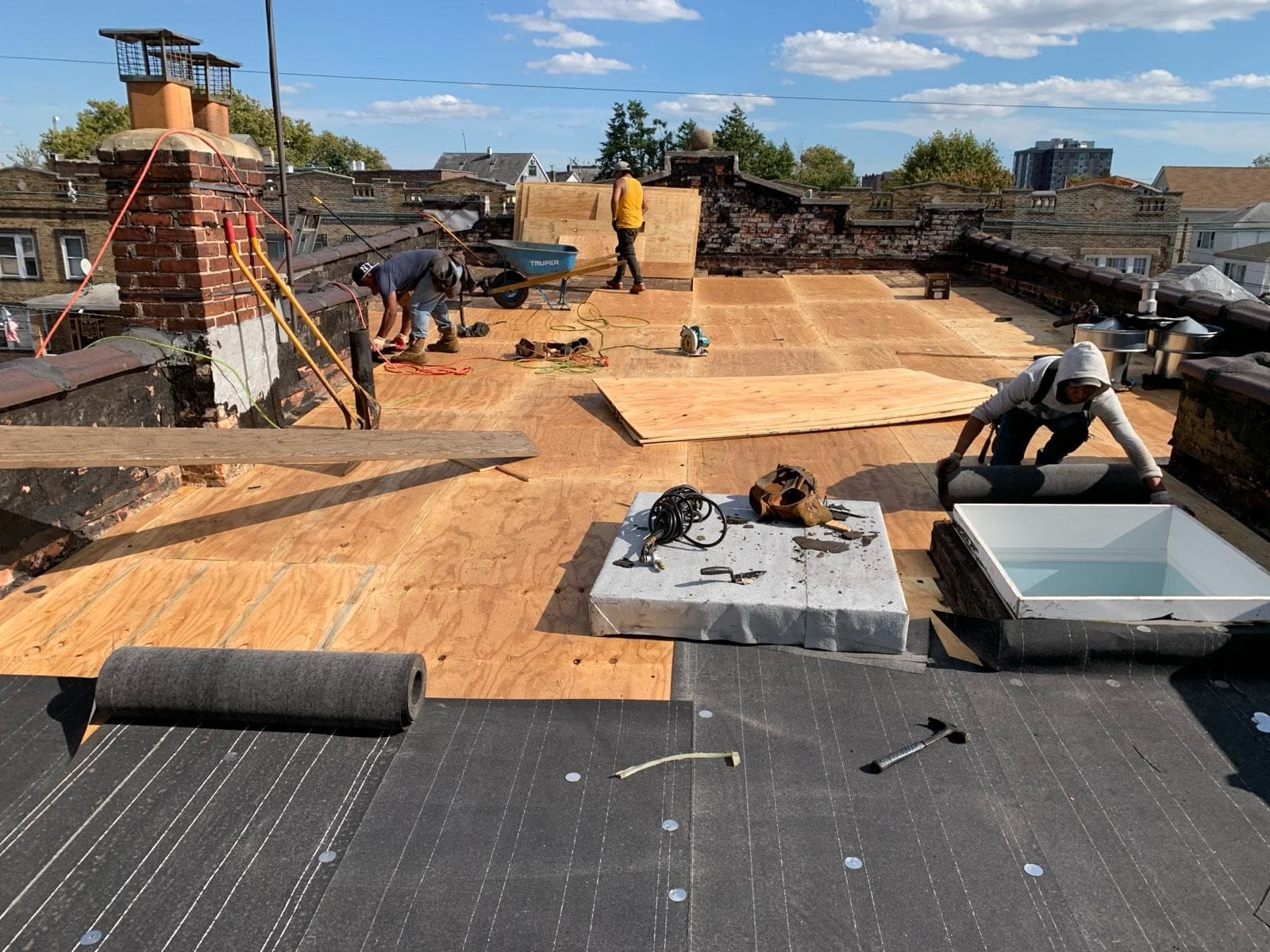
Flat roof replacement around a skylight and brick chimneys

Common Problems

Signs you may need flat roof repair

Ponding Water

Water that is still standing two days after rain is ponding. It adds weight, accelerates membrane breakdown, breeds algae, and finds every pinhole. Causes include clogged drains, sagging insulation, and a deck that was never sloped. The fix depends on which one it is.

Split or Open Seams

Seams are where flat roofs leak most. Adhesive ages, heat-welds were done poorly, or the membrane shrinks and pulls the lap apart. Open seams on EPDM, TPO, and modified bitumen each need a different repair method to hold.

Blisters and Bubbles

Trapped moisture or air under the membrane expands in summer heat and lifts a bubble. Small blisters can be monitored; large ones or any that crack open need to be cut, dried, and patched before water gets into the insulation.

Clogged Drains and Scuppers

Leaves, roofing granules, and debris block drains and scuppers, and the roof turns into a pool. Water then rises above flashing heights and enters at the walls. Keeping drains clear is the single most effective flat roof maintenance there is.

Cracked Flashing at Walls and Curbs

Where the membrane turns up a parapet wall, a skylight curb, or an HVAC unit, it is held by flashing and termination bars. These joints crack, pull away, and lose their sealant. Water enters at the top edge and runs down behind the membrane.

Punctures From Foot Traffic and Debris

HVAC technicians, dropped tools, storm debris, and even a chair leg on a roof deck can puncture a membrane. These are small, hard to spot, and leak directly. A quick walk of the roof after any work up there catches them early.

Our Process

How flat roof repair works with Asset

  1. 01

    Identify the Membrane and the Problem

    We determine what the roof is made of, check seams, flashing, drains, and penetrations, and probe for wet insulation under the surface.

  2. 02

    Dry, Prime, and Repair

    The area is cleaned and dried, primed as the material requires, and repaired with compatible membrane and adhesive or heat welding. Shortcuts here are why so many flat roof patches fail.

  3. 03

    Address the Drainage

    We clear drains, check slope, and recommend crickets or tapered insulation where water is ponding so the same spot does not fail again next year.

Honest Guidance

Repair or Replace?

Repair the flat roof when

  • Leaks trace to a few seams, a drain, or one flashing detail
  • The insulation beneath is still dry when probed
  • The membrane is pliable and not shrinking away from the edges
  • Ponding is caused by a blocked drain rather than a sagging deck
About our repair service

Replacement makes more sense when

  • Seams are opening in many places across the roof
  • Insulation is saturated over a large area
  • There are already multiple layers or a failed recover on top
  • Ponding is widespread and built into the roof structure
About our replacement service

A moisture check tells us most of what we need to know. Repairing over wet insulation only delays the inevitable.

Special Offers

Current offers for flat roof repair

Roofing & Chimney 10% Off

Veterans, Active Military & First Responders: 10% Off

Thank you for your service. Veterans, active-duty military, police, firefighters and EMS receive 10% off any roofing or chimney job, repair or replacement.

Claim Your Discount
Mention code SERVICE10 No expiration Valid ID or proof of service required. Discount up to $1,500 per project. One offer per household. Cannot be combined with other offers. Must be mentioned before the estimate is signed. Valid for new contracts in our North New Jersey service area.

Service Areas

Flat Roof Repair across North New Jersey

We serve every municipality in these ten counties.

FAQ

Flat Roof Repair questions, answered

What kind of flat roof do I have?

Black rubber sheets with glued seams are EPDM. White or light-gray plastic-like sheets with welded seams are TPO or PVC. Granulated rolls that look like a thick shingle surface are modified bitumen. A surface of gravel over tar is a built-up roof. It matters because each one requires compatible repair materials, and we confirm it before we start.

Why does water sit on my flat roof after rain?

Either it cannot get to the drain or the drain cannot take it. Blocked drains and scuppers are the common cause and the easy fix. Sagging insulation, a deflected deck, or a roof that was never sloped properly create low spots that need crickets or tapered insulation to correct. We find out which before recommending anything.

Can you repair a flat roof in cold weather?

Yes, within limits. Heat-welded membranes like TPO can be repaired in cold weather. Adhesives for EPDM and some modified bitumen products need minimum temperatures to cure, so certain repairs are scheduled for a milder day. An active leak gets addressed regardless, with a permanent repair to follow if the material requires it.

How much does flat roof repair cost?

It depends on the membrane type, the size and number of areas being repaired, whether wet insulation has to be removed, how much flashing is involved, and access to the roof. A single seam or drain repair is a small job; rebuilding parapet flashing around an entire roof is not. We assess the roof and give you a free written estimate.

Can a flat roof be coated instead of repaired?

Coatings have a place on a roof that is structurally sound and dry but weathered. They do not fix open seams, wet insulation, or failed flashing; those have to be repaired first. A coating over problems hides them for a season. We will tell you honestly whether your roof is a candidate.

How often should a flat roof be checked?

Twice a year is a good habit: once in late fall after leaves have dropped, and once in spring after winter. Clear the drains, look for standing water, check seams and flashing, and walk it after any contractor has been up there. Catching a split seam early is a patch; finding it a year later is wet insulation.

Free Estimates · Licensed & Insured

Ready to talk about flat roof repair?

Tell us what you are seeing. We will come out, take a look, explain what we find, and give you a free written estimate. No pressure.

Request Flat Roof Repair (201) 727-3113

Mon – Sat: 9:00 AM – 8:00 PM