Every wood fire leaves a residue on the inside of the flue. Creosote starts as a flaky soot and, with enough buildup and repeated heating, hardens into a glossy tar that burns at very high temperatures if it ignites. Chimney fires are usually creosote fires. Gas and oil appliances do not produce creosote, but their flues still collect soot, acidic deposits, rust flakes and whatever falls in from the top.
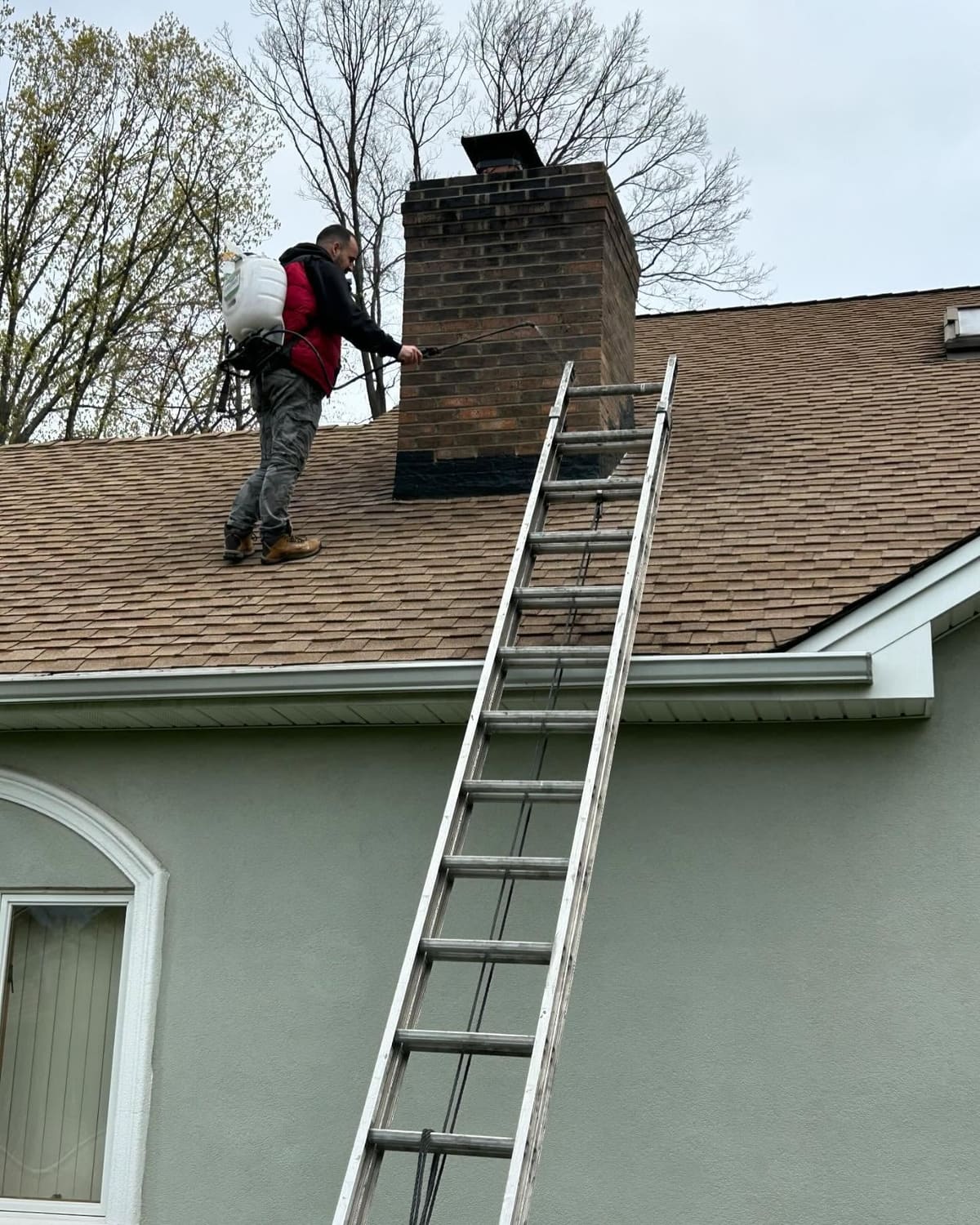
Asset Roofing & Chimney cleans fireplace and appliance flues across North New Jersey. We sweep from the top or bottom depending on the chimney, using brushes sized to the flue and rods that reach its full length, with the hearth sealed and a vacuum running so soot stays out of the room. Along the way we clear nests and debris, check the damper and smoke chamber, and note anything that looks like it needs repair.
If you burn wood regularly, plan on a cleaning at least once a year and more often with heavy use or if you burn unseasoned wood. Schedule it in late summer or early fall, before the rush. If you smell smoke in the house, hear flapping in the flue, or see black flakes falling into the firebox, do not wait for the season to start.
What chimney cleaning from Asset includes
- Sweeping of the flue with brushes sized to the liner, top to bottom
- Cleaning of the smoke chamber, smoke shelf, damper and firebox
- Removal of nests, debris and blockages
- Hearth sealed and vacuum run so soot stays out of your home
- Visual check of the flue, damper and firebox for damage
- Cleaning of furnace and water heater flues on request
- Written note of anything that needs further inspection or repair