North NJ's Trusted Roofing & Chimney Specialists · Free Written Estimates

Chimney · North New Jersey

Chimney Flashing Repair in North New Jersey

The joint between chimney and roof is where most chimney leaks start. We repair and replace flashing the right way, with metal, not a tube of sealant.

  • Licensed & Insured
  • Free Estimates
  • Mon – Sat: 9:00 AM – 8:00 PM
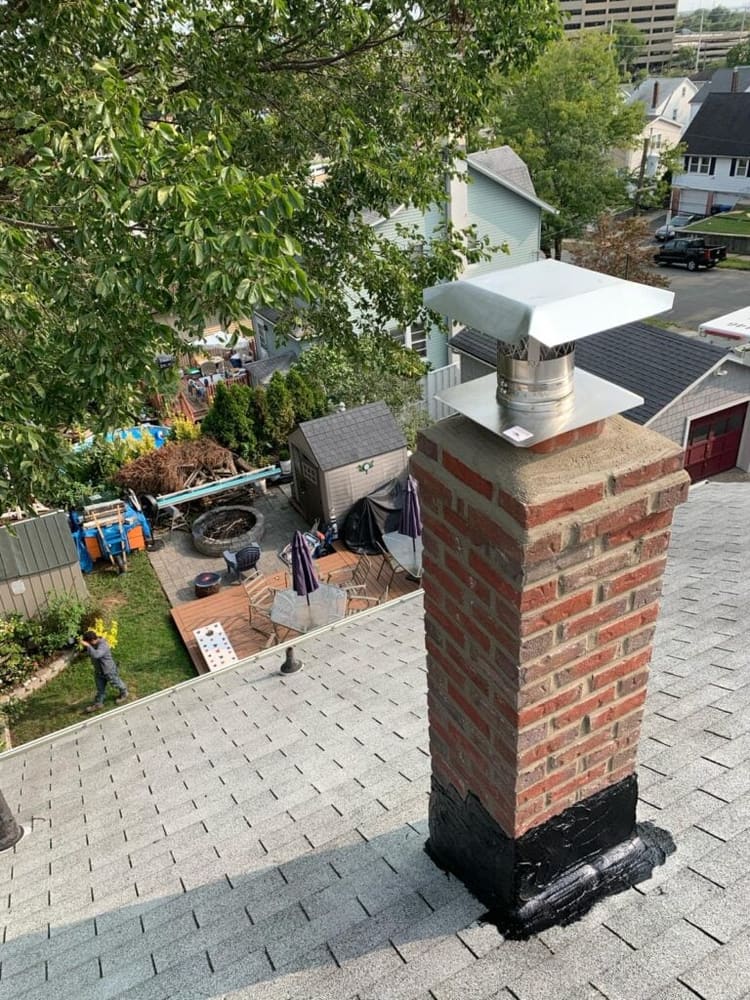
Brick chimney with newly repaired flashing

Flashing is the system of metal pieces that bridges the gap between a chimney and the roof around it. Done properly, it has two layers: base and step flashing woven into the shingles, and counter-flashing cut into the mortar joints of the chimney and bent down over the first layer. Water that runs down the brick hits the counter-flashing, drops onto the step flashing and is carried out onto the roof.

Flashing fails in predictable ways. Counter-flashing that was surface-mounted and caulked instead of let into the mortar pulls away as the sealant ages. Step flashing that was reused during a reroof no longer laps correctly. Metal corrodes, nails back out, and the mortar holding the counter-flashing erodes. Asset Roofing & Chimney repairs all of it, and because we are masons as well as roofers, we can grind and repoint the reglet joint rather than smearing sealant over it.

If you see a stain on the ceiling along one side of the chimney, lifted or rusted metal at the roofline, or dried caulk peeling away from the brick, flashing is the likely cause. It is one of the more affordable chimney repairs when caught early and one of the more expensive leaks when ignored.

What chimney flashing repair from Asset includes

  • Assessment of base, step and counter-flashing and the mortar they sit in
  • Removal of failed sealant and corroded or improperly installed metal
  • New step and base flashing woven into the roofing
  • Counter-flashing cut into the mortar joints and sealed, not surface-mounted
  • Cricket construction behind wide chimneys where missing
  • Shingle replacement around the chimney where roofing was disturbed
  • Repointing of mortar joints that anchor the flashing
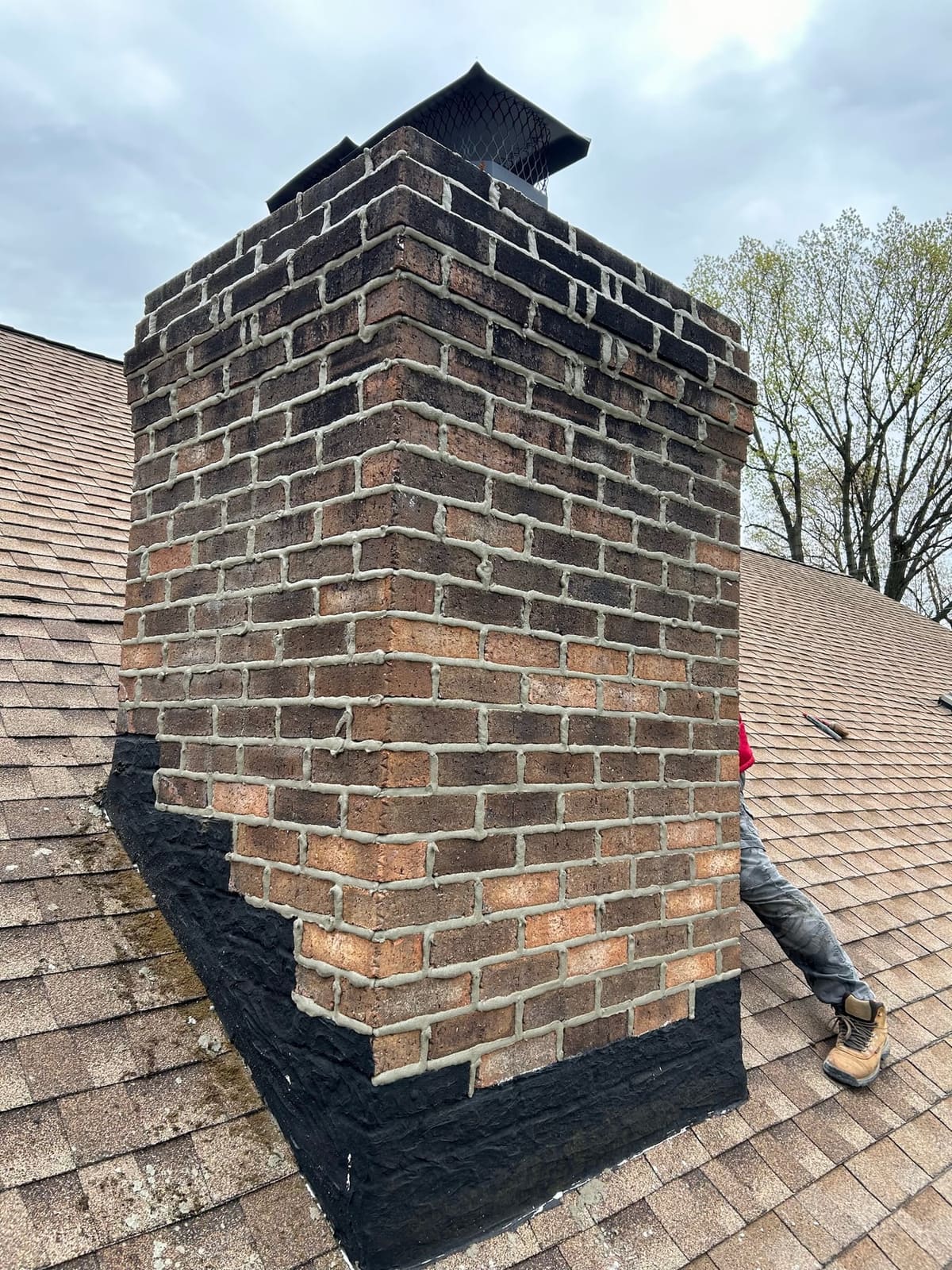
Chimney base flashing sealed on a shingle roof

Our Work

Chimney Flashing Repair: our crews at work

Real photos from Asset Roofing & Chimney jobs across North New Jersey.

Chimney base flashing sealed on a shingle roof
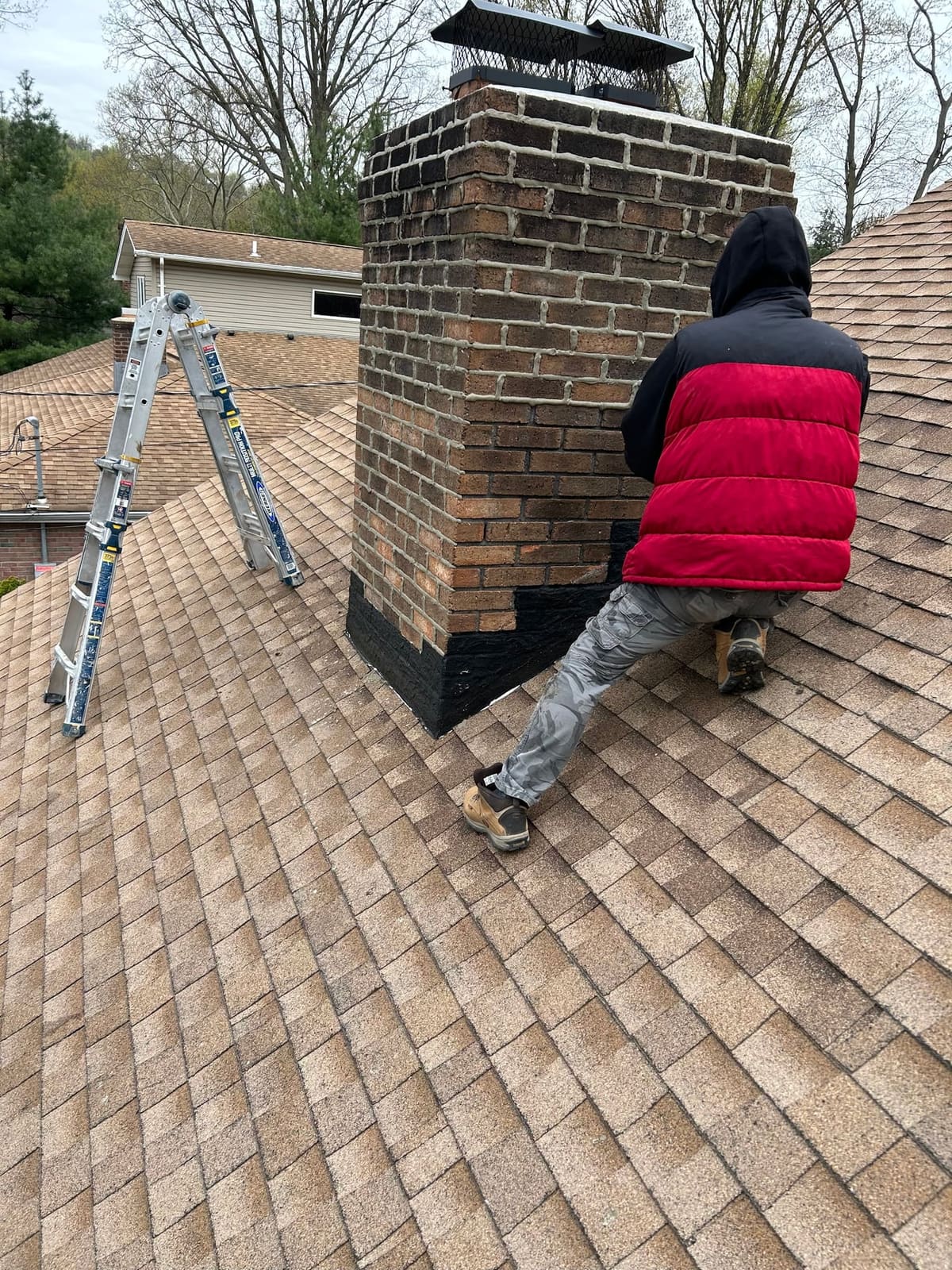
Roofer inspecting chimney flashing on an asphalt shingle roof
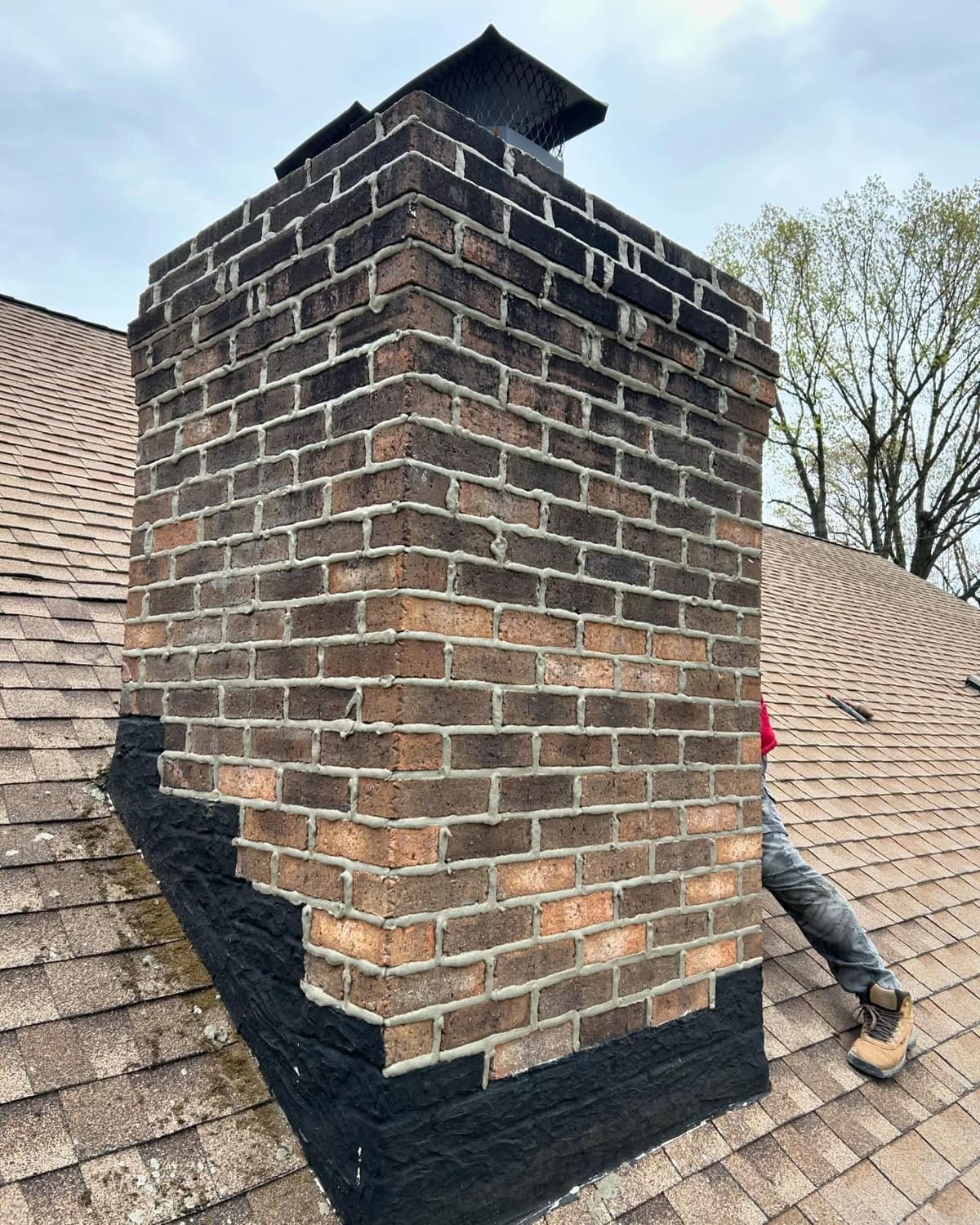
Chimney rebuild finished with new cap and sealed base flashing

Common Problems

Signs you may need chimney flashing repair

Caulked-on counter-flashing

A shortcut we see constantly: counter-flashing glued to the face of the brick with sealant instead of being set into a cut mortar joint. It works for a season or two. Then the sealant shrinks, the metal lifts, and water runs straight behind it.

Flashing reused during a reroof

When a roof is replaced, the old step flashing is sometimes left in place to save time. It rarely laps correctly with the new shingles, and old nail holes become new leaks. If the chimney began leaking after a reroof, this is the first thing we check.

Rust and corrosion

Galvanized flashing eventually rusts through, especially where it holds standing water behind the chimney. Rust streaks on the shingles below the chimney are a visual tip-off. Rusted flashing is replaced, not patched.

No cricket behind a wide chimney

A chimney more than about 30 inches wide on the upslope side should have a small peaked saddle, called a cricket, to divert water around it. Without one, water and debris pile up against the back of the chimney, and the flashing there fails first.

Open mortar at the reglet

Even correctly installed counter-flashing depends on the mortar joint it sits in. When that joint erodes, the flashing loosens and water enters at the top edge. Repointing the reglet is part of a proper flashing repair, not an extra.

Our Process

How chimney flashing repair works with Asset

  1. 01

    Inspect both sides of the joint

    We check the roofing side and the masonry side, since a flashing leak can come from either. Where the chimney is also leaking at the crown or through brick, we tell you, so you are not paying for flashing that will not solve the problem.

  2. 02

    Remove and rebuild the flashing

    Failed metal and old sealant come off. New step flashing is woven into the shingles course by course, base flashing is set, and counter-flashing is let into freshly cut mortar joints and bent down over the step flashing.

  3. 03

    Seal, point and test

    The reglet joints are pointed, the metal is sealed at laps, and we run water down the chimney to confirm the joint sheds correctly before we leave.

Special Offers

Current offers for chimney flashing repair

Roofing & Chimney 10% Off

Veterans, Active Military & First Responders: 10% Off

Thank you for your service. Veterans, active-duty military, police, firefighters and EMS receive 10% off any roofing or chimney job, repair or replacement.

Claim Your Discount
Mention code SERVICE10 No expiration Valid ID or proof of service required. Discount up to $1,500 per project. One offer per household. Cannot be combined with other offers. Must be mentioned before the estimate is signed. Valid for new contracts in our North New Jersey service area.

Service Areas

Chimney Flashing Repair across North New Jersey

We serve every municipality in these ten counties.

FAQ

Chimney Flashing Repair questions, answered

How can I tell if the leak is the flashing or something else?

Flashing leaks typically show up as a stain along one side of the chimney at ceiling level, often worse after wind-driven rain. Crown and cap leaks tend to appear in the firebox or as a stain centered on the chimney. Brick absorption shows as damp or peeling surfaces on the chimney breast. The pattern helps, but we confirm it from the roof before recommending anything.

Should flashing be replaced when I get a new roof?

In nearly every case, yes. New shingles with old flashing is a weak point built into a new roof, and redoing it later means disturbing shingles that were just installed. If you are planning a roof replacement, ask that chimney flashing be included and that counter-flashing be cut into the mortar, not caulked on.

What is counter-flashing and why does it matter?

Step flashing alone leaves a vertical edge against the brick where water can get behind it. Counter-flashing is a second piece set into a mortar joint above and bent down over the step flashing, so water running down the chimney is shed onto the roof rather than behind the metal. Without it, the system relies on sealant, which does not last.

What drives the cost of flashing repair?

Chimney size, roof pitch and height, the number of sides that need work, whether a cricket must be built, and how much roofing has to be removed and replaced to do it properly. A small chimney on a low roof is a quick job; a large stack on a steep slope with a missing cricket is not. Estimates are free and itemized.

Can flashing be repaired in cold weather?

Metal work can be done year-round. The limiting factor is the mortar used to point the counter-flashing joint, which needs to cure above freezing. In winter we can install the flashing and use an appropriate sealant at the reglet, then return to point the joint when temperatures allow, or schedule the whole job for a mild stretch.

Free Estimates · Licensed & Insured

Ready to talk about chimney flashing repair?

Tell us what you are seeing. We will come out, take a look, explain what we find, and give you a free written estimate. No pressure.

Request Flashing Repair (201) 727-3113

Mon – Sat: 9:00 AM – 8:00 PM